



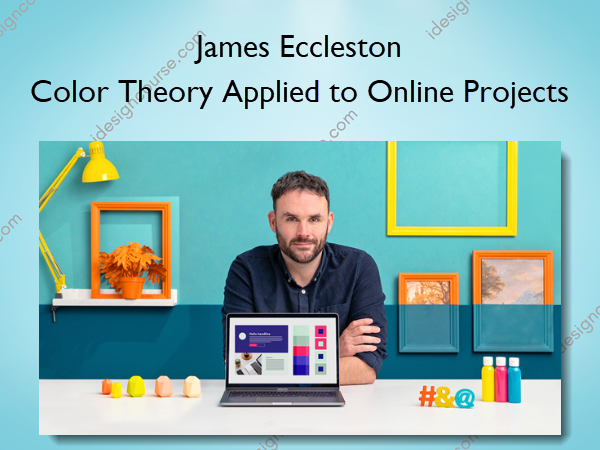
 Color Theory Applied to Online Projects Information
Learn the science behind color to create engaging and cohesive digital designs that improve communication
Color plays a crucial role in the communication process, as it establishes a deep connection with the audience through human psychology and cultural context. Branding and UX expert James Eccleston has found in color one of the most powerful tools for solving problems through design.
In this course, learn the big ideas behind color theory and learn how to apply them in your own digital designs. This course will enable you to be a more complete designer by giving you the tools you need to communicate with color and analyze other designers’ work in terms of color.
This is James’ second course on Domestika, after Brand Strategy for Online Platforms, where he teaches how to develop a professional digital brand concept.
Start by getting to know James, how he started off in the industry, and the designers that have influenced his work in terms of color. He then gives you a summary of the course’s contents.
Learn exactly what color is and why we see certain colors as we do. Also, learn color terminology to help you improve your communication and ideas in presentation skills.
Discover how to combine colors using color harmony and produce a color palette. Then, learn how to apply a color palette to an illustration and a website.
Finish the course with some tips and tricks for fixing bad color combinations and discovering the best way to design and apply color to call to action buttons.
Here’s what you’ll get:
- Introduction
- Understanding What Colour Is
- Creating and Applying a Colour Palette
- Post-production
- Final project
Who is this course for?
Designers who want to master the use of color for online projects.
About Author
 James Eccleston is an English designer and founder of Bridge, a Madrid-based brand & UX design studio that helps people improve their brands through a passion for the process of design and the needs of an audience. While completing his Bachelor’s degree in Design at The University of Salford in Manchester, James began his career designing record sleeves for rock bands and then ventured into working for major branding agencies in London for 8 years once he obtained his degree.
After spending four years working with tech startups in Buenos Aires, Argentina, his perspective on design evolved, seeing the need to elevate the power of design and turn it into a more collaborative environment. James founded his design studio in Madrid, after a 6-month backpacking trip from Buenos Aires to New York, where he created whatmadeyouhappy.com, interviewing the people he met along the way. This experience laid the groundwork for his philosophy at Bridge: “life and business are all about making genuine connections and helping people.” Their most notable clients include Virgin, McCann, Sociably, IED Madrid, and more.
More courses from the same author: James Eccleston
Salepage: Color Theory Applied to Online Projects – James Eccleston
Related products

»Pre-Order


»Pre-Order